Nov • 13 • 2026
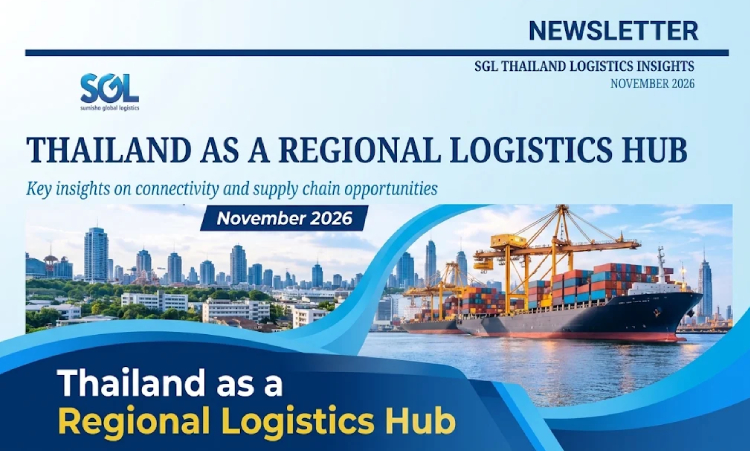
THAILAND AS A REGIONAL LOGISTICS HUB
INSIGHT 1 | THAILAND'S ROLE AS A REGIONAL LOGISTICS HUB
Turning connectivity into supply chain opportunities
Thailand is continuing to develop its ambition to become a regional logistics hub. In October 2026, the government outlined plans to better integrate road, rail, sea and air transport, including further railway development, port connectivity and expanded air cargo capacity.
These developments reflect a broader objective: improving the movement of goods within Thailand and strengthening its connections with regional and international markets.
For manufacturers and businesses managing cross-border supply chains, connectivity is only one part of the equation. How goods are stored, when inventory is positioned, and how transportation is coordinated can also influence overall logistics performance.
What should businesses consider?
Companies using Thailand as a manufacturing or distribution base may benefit from reviewing three areas:
- WAREHOUSE LOCATION: Is inventory positioned close to production facilities, suppliers, ports or key customers?
- TRANSPORTATION: Can international freight, customs procedures and domestic delivery be coordinated effectively?
- INVENTORY STRATEGY: Is the current stockholding approach flexible enough to respond to changes in demand, supply or delivery schedules?
A well-coordinated logistics network can help businesses make better use of available infrastructure while identifying opportunities to improve efficiency and manage costs.
THE SGL THAILAND PERSPECTIVE
At SGL Thailand, we believe that effective logistics planning involves more than moving cargo from one location to another. Warehousing, transportation and customs-related processes need to work together to support each customer's supply chain requirements. By reviewing these elements as a whole, businesses can identify practical opportunities to improve the flow of materials and products across borders.
INSIGHT 2 | FREE ZONE WAREHOUSING AND INVENTORY FLEXIBILITY
More than storage: A tool for international supply chain planning
For businesses involved in importing, manufacturing and exporting, inventory management can affect both operational flexibility and cash flow.
Thailand's Free Zone framework provides specific customs and tax arrangements for eligible goods and activities, subject to applicable regulations and Customs procedures. Depending on the business model and the intended movement of goods, using a Free Zone may support certain import, storage, manufacturing, export or re-export operations.
However, Free Zone warehousing is not simply a matter of storing goods without paying taxes. Eligibility, documentation, inventory controls and the destination of the goods all need to be considered.
How can Free Zone warehousing support business operations?
- INVENTORY POSITIONING | Businesses may be able to position eligible imported goods or materials in a Free Zone while planning their next steps, subject to the applicable rules. This can be relevant for companies coordinating international supply with production or export schedules.
- CUSTOMS AND TAX PLANNING | Eligible goods may receive specific customs duty and tax treatment while they remain within the Free Zone. The timing and amount of any duties or taxes depend on the goods, their intended use and their subsequent movement. When goods enter the domestic Thai market, the applicable import procedures and duties or taxes must be considered.
- IMPORT, EXPORT AND RE-EXPORT COORDINATION | For businesses handling goods across multiple markets, Free Zone operations may form part of a wider logistics strategy connecting international shipments, storage and onward distribution.
Questions businesses should ask
- Where will the goods ultimately be used or shipped?
- What customs documentation and inventory controls will be required?
- How will the warehouse coordinate with transportation and customs-clearance activities?
- How long will inventory need to be stored?
- Which duties, taxes and other costs may apply to the planned movements?
A review of these questions can help businesses determine whether a Free Zone arrangement is suitable for their particular supply chain.
THE SGL THAILAND PERSPECTIVE
SGL Thailand can discuss relevant warehousing and transportation requirements with businesses evaluating their logistics options. By understanding the movement of goods, inventory needs and intended destinations, the appropriate operational approach can be considered.
Free Zone eligibility and customs or tax treatment should always be confirmed for the specific business model and shipment before implementation.
YOUR TRUSTED LOGISTICS PARTNER IN THAILAND